
Close Menu
  • Home
  • About Us
  • News
  • Economy
  • Technology
  • Lifetsyle & Health
  • Education
  • Culture
  • Sports
  • Contact Us
What's Hot

Study in Canada: Build Your Future with Vocational Colleges (2026 Guide)

July 20, 2026

Study in Canada: Top Vocational Colleges for International Students (2026 Guide)

July 20, 2026

Troy Jackson poised to replace Graham Platner as Democratic nominee in Maine Senate race | Maine

July 20, 2026
Facebook X (Twitter) Instagram
The Nexus Report – Where News, Trends & Ideas Connect.
Facebook X (Twitter) Instagram
Subscribe
  • Home
  • About Us
  • News
  • Economy

    Global Banking Crisis Fears and Slowdown Approaching in 2024

    January 30, 2025

    Trump’s Crackpot Crypto Scheme to Reduce Inflation Would Be a Financial Catastrophe

    January 30, 2025

    Crypto Daybook Americas: Somber Crypto Market Eyes Slow Progress on U.S. Bitcoin Reserve

    January 30, 2025

    QCP Capital: Crypto Markets Face Volatility Amid Geopolitical Uncertainty

    January 30, 2025

    Binance Pay Partners with xMoney to Expand Crypto Accessibility Across Europe

    January 30, 2025
  • Technology
  • Lifetsyle & Health

    The Cut Article Sparks Outrage Over Writer’s Neglect of Her Cat

    January 30, 2025

    Back to School 2024 Amid a COVID Surge: Latest Symptoms and Guidelines

    January 30, 2025

    9 Museums & Other Exhibitions to Visit on International Museum Day 2024

    January 30, 2025

    14 Stunning Beach House Rentals That’ll Make You Want to Relocate

    January 30, 2025

    What is Grey Divorce and Its Possible Implications? Know Everything Here

    January 30, 2025
  • Education
  • Culture
  • Sports
  • Contact Us
The Nexus Report – Where News, Trends & Ideas Connect.
Home»AI»The risk of weather data sabotage is rising
AI

The risk of weather data sabotage is rising

The Nexus ReportBy The Nexus ReportJuly 18, 2026No Comments3 Mins Read
Share Facebook Twitter Pinterest LinkedIn Tumblr Telegram Email Copy Link
Follow Us
Google News Flipboard
Share
Facebook Twitter LinkedIn Pinterest Email

[ad_1]

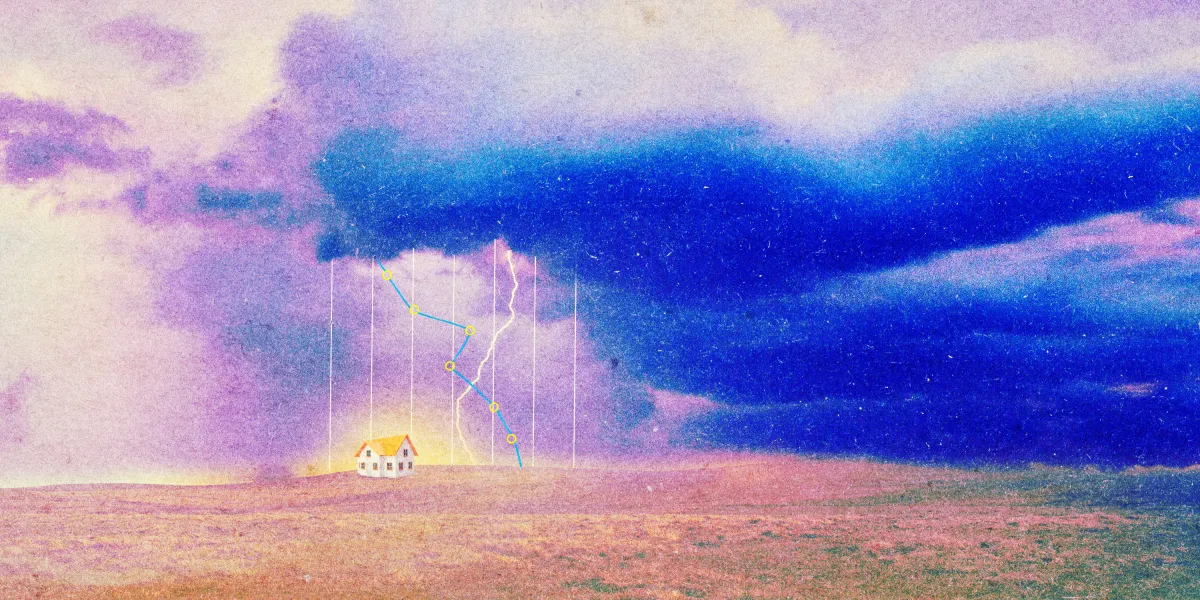
At the low end of the risk scale, an individual speculator manipulates a weather station for personal gain—that is the CDG Airport case. One step up: A group of traders could coordinate to bias forecasts of renewable energy output, moving wholesale electricity prices and leaving whoever is on the other side of the trade holding the loss. And at the far end, a state actor or saboteur could manipulate one or many stations to set off an early warning system or even keep one silent when it should sound. Step by step, the risk grows, from fraud to compromised disaster preparedness to a matter of national security.  

As long as there are financial (or other) incentives to manipulate observational data, adversaries will search for new opportunities, and it is our task to stay one step ahead. Here are three ways.

1. Watch the stations. Data quality controls should include station security, anomaly detection and correction, and human oversight. Weather stations should be monitored continuously to deter tampering. Data homogenization methods that clean up weather records also need to get faster, with the goal of catching problems in real time. This will become increasingly important as agentic AI systems use these data to deliver real-time decisions. Finally, human oversight is needed to flag questionable data and model outcomes. After all, it was humans who caught the CDG Airport manipulation.

2. Protect the data to safeguard the AI. Data defense mechanisms must be positioned throughout the AI pipeline. AI explainability and adversarial robustness tools can help us understand the underlying data and the AI model outputs, help us identify data- or model-related issues, and potentially  make us more resilient to adversarial attacks. 

3. Ensure continuous accountability along the chain. Observational data passes through many hands: the operators who run the stations, the national weather services that steward the records, and the forecasting centers that turn them into predictions. No single one of them can protect data integrity alone—each guards its own link, and any anomaly needs to be communicated along the whole chain, from station operators to the people acting on the forecast.

It is fortunate that the situation at CDG Airport was caught, but it should serve as a wake-up call. As the role of observational data grows in weather forecasting, we need to adapt to evolving threats. This means protecting our data and models by strengthening existing oversight and accountability structures, and improving coordination among key partners.

This op-ed was written by:

  • Monique Kuglitsch — Innovation Manager at Fraunhofer Heinrich Hertz Institute and Chair of the UN Global Initiative on Resilience to Natural Hazards through AI Solutions
  • Jesper Dramsch — Scientist for Machine Learning at the European Centre for Medium-Range Weather Forecasts (ECMWF), where they work on AIFS (Artificial Intelligence Forecasting System), ECMWF’s data-driven weather prediction model
  • Franz G. Kuglitsch — Climate Scientist and Executive Secretary of the International Union of Geodesy and Geophysics (IUGG) at the GFZ Helmholtz Centre for Geosciences in Potsdam
  • Andrea Toreti — Senior Scientist at the European Commission’s Joint Research Centre (JRC), where he coordinates the European and Global Drought Observatory under the Copernicus Emergency Management Service
  • <

[ad_2]

Source link

Share. Facebook Twitter Pinterest LinkedIn Tumblr Email
The Nexus Report
  • Website

Related Posts

The Download: AI hiring biases, and weather data sabotage

July 20, 2026

Experts warn of rise in sadistic online exploitation of vulnerable children | Technology

July 20, 2026

AI is more likely than humans to form biases when hiring

July 20, 2026
Add A Comment
Leave A Reply Cancel Reply

Economy News

Study in Canada: Build Your Future with Vocational Colleges (2026 Guide)

By The Nexus ReportJuly 20, 2026

Canada is a top destination for international students seeking practical, career-focused education. Vocational colleges and…

Study in Canada: Top Vocational Colleges for International Students (2026 Guide)

July 20, 2026

Troy Jackson poised to replace Graham Platner as Democratic nominee in Maine Senate race | Maine

July 20, 2026
Top Trending

Study in Canada: Build Your Future with Vocational Colleges (2026 Guide)

By The Nexus ReportJuly 20, 2026

Canada is a top destination for international students seeking practical, career-focused education.…

Study in Canada: Top Vocational Colleges for International Students (2026 Guide)

By The Nexus ReportJuly 20, 2026

Canada is one of the world’s top destinations for international students looking…

Troy Jackson poised to replace Graham Platner as Democratic nominee in Maine Senate race | Maine

By The Nexus ReportJuly 20, 2026

Troy Jackson – a logger, longtime legislator and former president of the…

Subscribe to News

Get the latest sports news from NewsSite about world, sports and politics.

Nexus Report banner.

The Nexus Report is your destination for breaking news, viral stories, technology, business, lifestyle, and global trends. We connect readers with the stories that matter and the ideas shaping our world.

Facebook X (Twitter) Instagram Pinterest
Recent Posts
  • Study in Canada: Build Your Future with Vocational Colleges (2026 Guide)
  • Study in Canada: Top Vocational Colleges for International Students (2026 Guide)
  • Troy Jackson poised to replace Graham Platner as Democratic nominee in Maine Senate race | Maine
  • Antibiotic-resistant bacteria increasingly leaving children vulnerable to common infections, global study finds | Health
  • Civil rights groups sue Trump administration over childcare funding restrictions | US news

Subscribe to Updates

Get the latest creative news from FooBar about art, design and business.

Facebook X (Twitter) Instagram Pinterest
  • Home
  • World Politics
  • Technology
  • Economy
© 2021 - The Nexus Report | All rights reserved

Type above and press Enter to search. Press Esc to cancel.